
Lake Huron & North Channel Wrecks
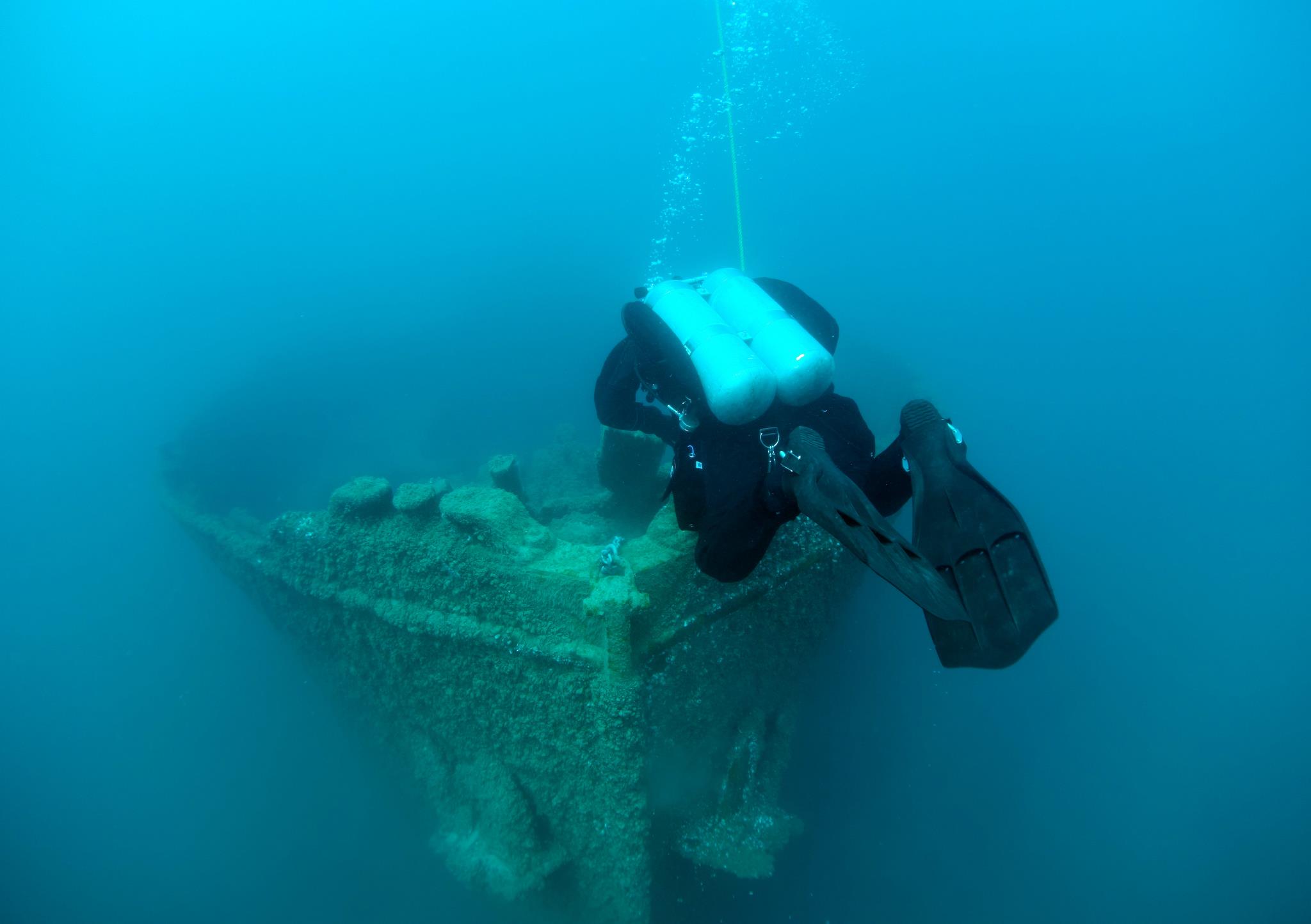
Southeastern Lake Huron holds some of the most accessible historic wreck diving in the Great Lakes. The Wexford, lost with all hands in the Great Storm of November 1913, sits upright in 75 feet of water within a short run of our Port Franks departure point. She is largely intact, well within recreational depths, and one of the most visited historic wrecks in Ontario.
For divers looking to travel a little farther, we also take the boat north once a year to Manitoulin Island to dive the Northwind, a steamer lost in 1926 in the North Channel and now sitting nearly intact between 80 and 110 feet.
Both wrecks are run aboard the Planet Express.
Wexford
The Wexford was a 250-foot steel bulk freighter built in England in 1883, primarily for trade with South America before she came to the Great Lakes. In November 1913, she was running from Thunder Bay to Goderich with a cargo of grain when she was caught in the Great Storm of 1913, often called the White Hurricane. The storm raged across the Great Lakes for four days, sank or stranded dozens of vessels in a single weekend, and claimed more than 250 lives. All 23 crew aboard the Wexford were lost.
She wasn’t found until 87 years after she went down, about nine miles north of Grand Bend. She sits upright in roughly 75 feet (23 metres) of water with most of the hatch covers open and all decks exposed, which is why divers often call her the Jungle Gym. Dishes, kitchen utensils, tools, and other artifacts are still scattered across the decks, offering a rare close-up look at a small piece of Canadian history.
Northwind
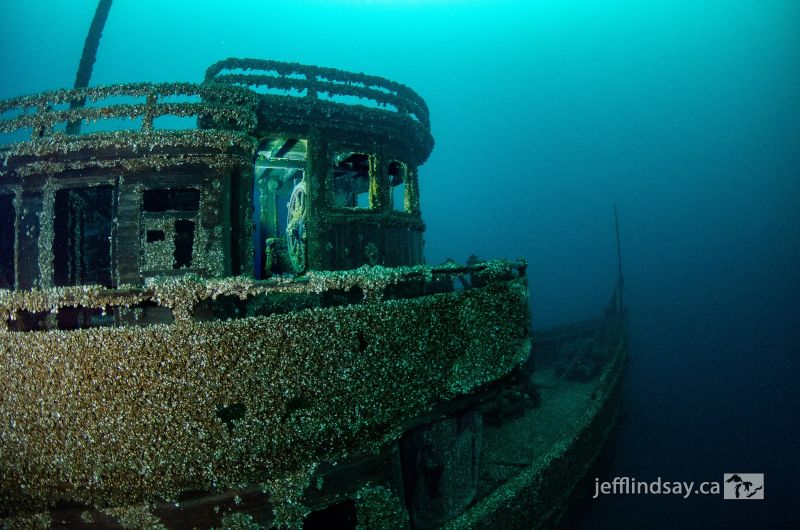
The Northwind was a Great Lakes and Atlantic steamer with an unusual history. Between 1888 and 1926 she was cut in half twice so she could be moved between the Upper Lakes and the St. Lawrence Seaway, and she sailed under several configurations across both bodies of water. On July 1, 1926, she struck Robertson’s Rock north of Clapperton Island in the North Channel and slid off into roughly 110 feet of water.
She lies nearly intact and is widely considered some of the best diving in the region. The bow can be reached at about 80 feet, where divers find the anchor windlass, bow railings, and chains running into the hawse pipes with the anchors still housed inside. Amidships, a four-bladed propeller sits secured to the deck alongside winches, and aft of that are the coal bunker, engine room, and accommodation areas. At the stern in 110 feet, massive clay ripples mark where the vessel was driven into the soft bottom as she sank.
Trips to the Northwind run as weekend charters out of Little Current on Manitoulin Island.