
JH Jones
Lost with all hands.
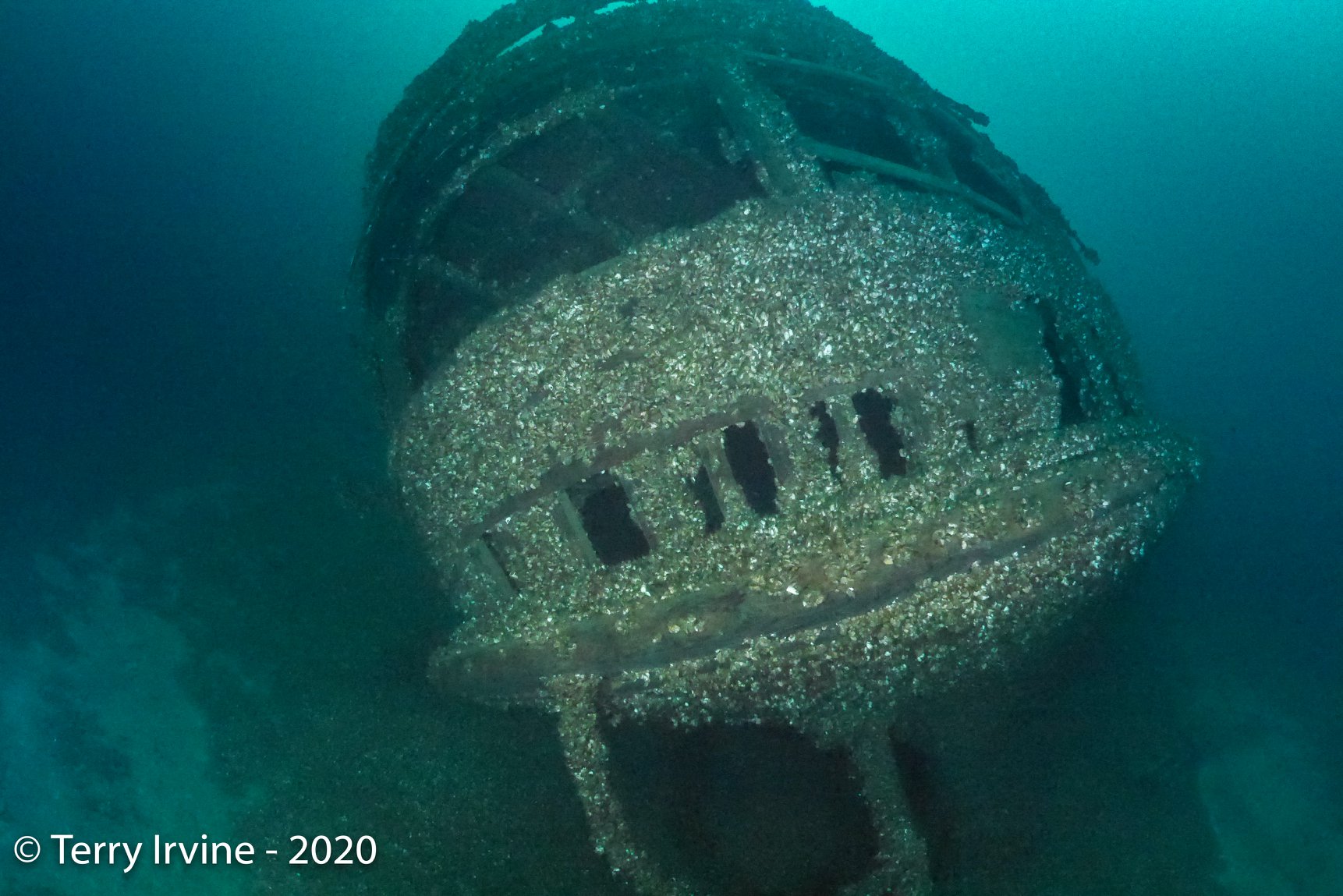
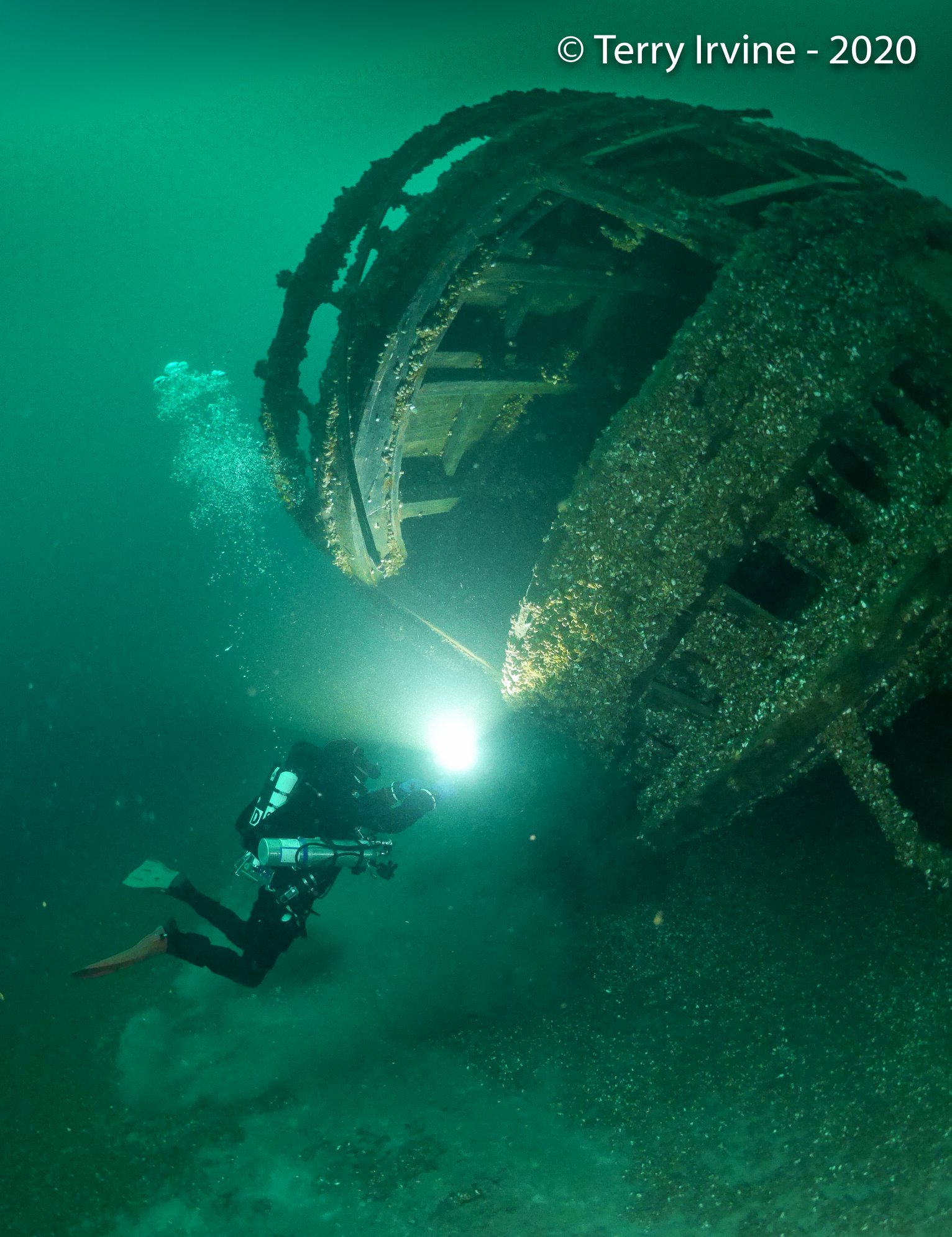
The JH Jones went down in a November storm off Cape Croker in 1906 with every soul aboard. She sits upright in 175 feet of water with a slight list to port, almost intact, in the same cold, clear conditions that have preserved the Manasoo a short run away. Getting to her takes the same training and the same respect.
On the wreck
The Jones sits upright on the bottom with a slight list to port. She is a wooden hull, so she doesn’t have the steel-vessel feel of the Manasoo, but her smaller scale, her intact deck structure, and her position on the bottom make her a striking dive in her own right.
Her bow is still pointing the way she was when she sank. Deck features, fittings, and rigging are still recognizable, and the cold dark water has held the wood together in a way that surprises divers who haven’t dived a Great Lakes wooden wreck at depth before.
The Jones is often paired with the Manasoo across a single weekend, and the contrast between the two is part of why divers come back for the pairing.
Built in Glasgow, worked in Owen Sound.
The JH Jones was built in 1888, the same year and the same city as the Manasoo. She was 107 feet long, wooden-hulled, and started her career as a fishing tug before being put to more general work running passengers, mail, and freight along the Bruce Peninsula between Owen Sound, Wiarton, and the small communities on the way up to Manitoulin Island.
For eighteen years she made that run as a regular working vessel, part of the everyday connective tissue of the Bay before roads reached most of the communities she served.
Caught off Cape Croker. On the morning of November 22, 1906, the Jones left Owen Sound on her regular run to Lion’s Head and Manitoulin Island with crew, passengers, and a deck cargo of apples and freight aboard. She ran into a heavy late-season storm off Cape Croker and was lost with everyone on board, somewhere between 25 and 30 souls depending on the account. No bodies were ever recovered.
Wreckage washed ashore for days afterward along the Bruce Peninsula. The wreck itself was not located until decades later. The Jones is a grave site, and we dive her accordingly.
Why FullyTek? The same team, the same standard.
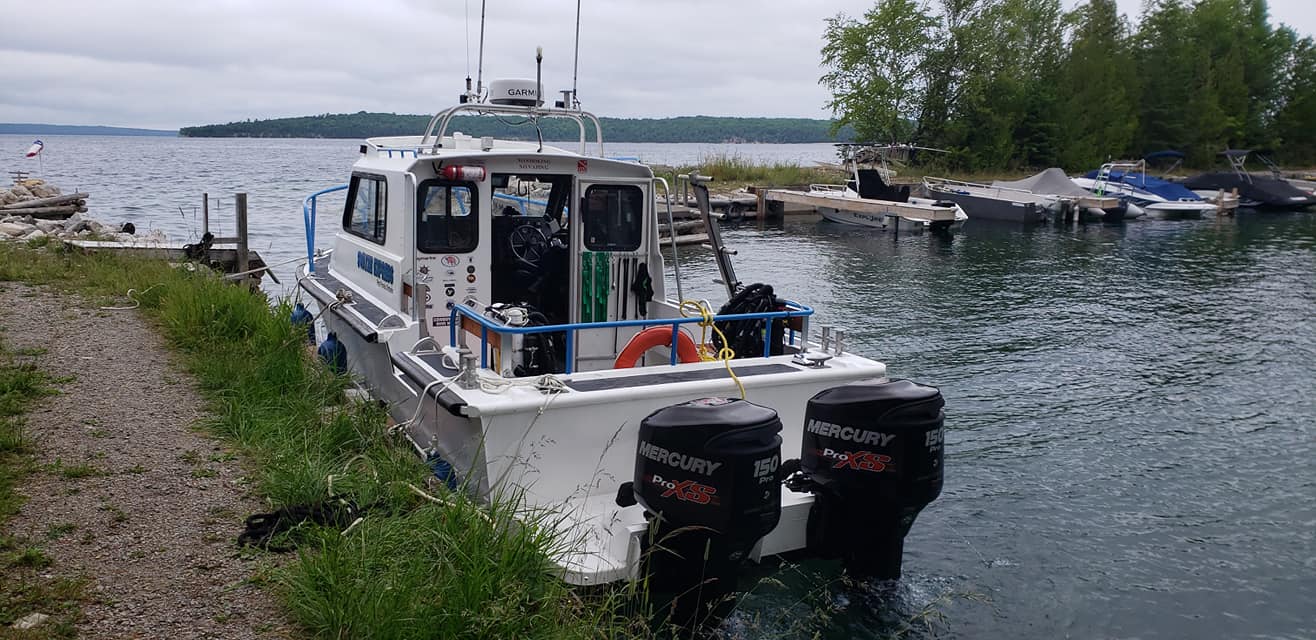
The Jones sits a short run from the Manasoo, and we dive her with the same preparation and the same surface support. The briefings cover the wreck honestly, including what’s worth seeing and what condition to expect in the conditions of the day. The run plan accounts for the weather, the depth, and the team on board.
Most divers who come for the Manasoo dive the Jones on the same weekend. The pairing is one of the best one-two technical wreck experiences in the Great Lakes.